

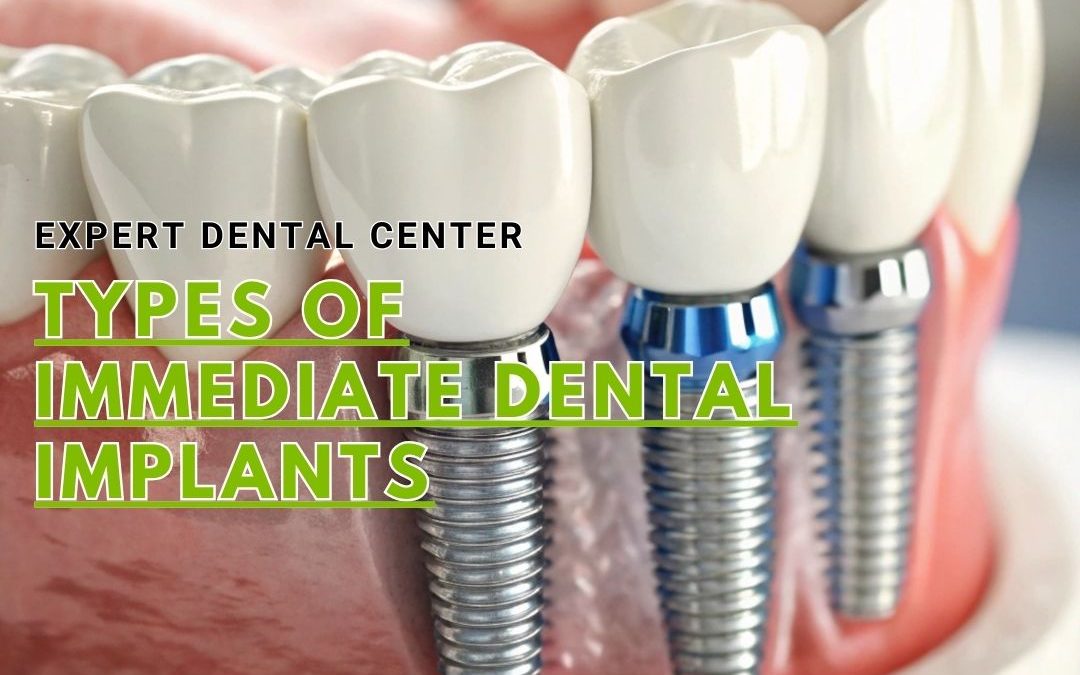
Many people want fast solutions to replace missing teeth, and this is where the importance of the types of immediate dental implants becomes clear. This technique represents a major shift in the field of implant dentistry, as it allows the dentist to place the implant on the same day the tooth is extracted. Because the options vary, the patient needs to understand the details to choose the most suitable type. Therefore, reviewing the advantages of each type becomes essential before making a decision.
Traditional Immediate Dental Implants
This type is the most commonly used in clinics. The dentist places the implant immediately after extracting the tooth. It is usually made of high‑quality pure titanium and integrates quickly with the bone. Dentists use this type when bone density is excellent and when no infections exist around the extracted tooth. In some cases, the dentist can load a temporary crown within a few days.
Mini Immediate Dental Implants
Mini implants are used in specific situations, such as supporting dentures or treating patients with narrow bone. These implants stand out due to their small diameter and easy placement, and they do not require complex surgery. However, their use remains limited based on the dentist’s evaluation. They are not preferred as a permanent option in the front teeth or high‑pressure areas.
Computer‑Guided Immediate Dental Implants
This type relies on 3D digital planning before the procedure. The dentist performs a precise digital scan of the mouth, then creates a guided implant plan with very high accuracy. This technique helps select the ideal implant location and avoid nerves and sensitive areas. Additionally, it reduces errors and speeds up healing, making it an excellent option for patients seeking maximum precision.
Types of Immediate Dental Implants at the Expert Dental Center in Qatar
At the Expert Dental Center in Qatar, patients can benefit from the latest types of immediate dental implants thanks to advanced equipment and extensive expertise. The doctors use computer‑guided implant placement, digital scanning, and 3D radiography to evaluate the case accurately before choosing the right implant. Moreover, the center uses top global implant systems to ensure fast and strong integration with the jawbone.
The doctors at the center have wide experience in implant dentistry and provide a full consultation before treatment. The official website offers detailed information about every procedure. Additionally, patients can watch educational videos through the center’s YouTube channel or visit their TikTok page to view real case experiences.
If you need more tips or advanced treatment, you can learn more about the Expert Dental Center in Qatar by visiting the clinic’s location in Doha or exploring its official digital platforms.
Does Bone Quality Affect the Choice of Implant Type?
Bone quality plays a major role in choosing the type of immediate implant. When bone density is high and thickness is sufficient, the dentist can use traditional full‑size implants, which provide excellent stability and strong support for the future crown. In these cases, the dentist usually places the implant immediately after extraction without additional procedures.
However, when the patient suffers from bone thinning or deterioration, the situation changes. The dentist cannot rely on large implants in weak bone. Therefore, he may choose alternatives such as mini implants, which need less bone thickness yet remain effective in many cases—especially when modern stabilization techniques are used. Sometimes, weak bone does not prevent implant placement; it only requires preparation such as local bone grafting or placing angled implants to avoid fragile areas.
Advanced 3D imaging and digital scanning help the dentist create a precise bone map, allowing him to choose the most suitable type of immediate implant without risk. Consequently, evaluating bone quality becomes a crucial step for long‑term success.
What Is the Difference Between Immediate and Traditional Implants?
The main difference lies in timing. Traditional implants require a waiting period of 3 to 6 months before placing the crown. In contrast, immediate implants allow the patient to receive a fixed tooth within days. Additionally, immediate implants require fewer sessions and save time and effort.
Conclusion
In the end, understanding the types of immediate dental implants helps patients make well‑informed treatment decisions. These types differ in size, technique, healing speed, and ideal placement location. By consulting a specialist at the Expert Dental Center in Qatar, the patient can determine the most suitable type accurately, ensuring excellent functional and aesthetic results.