

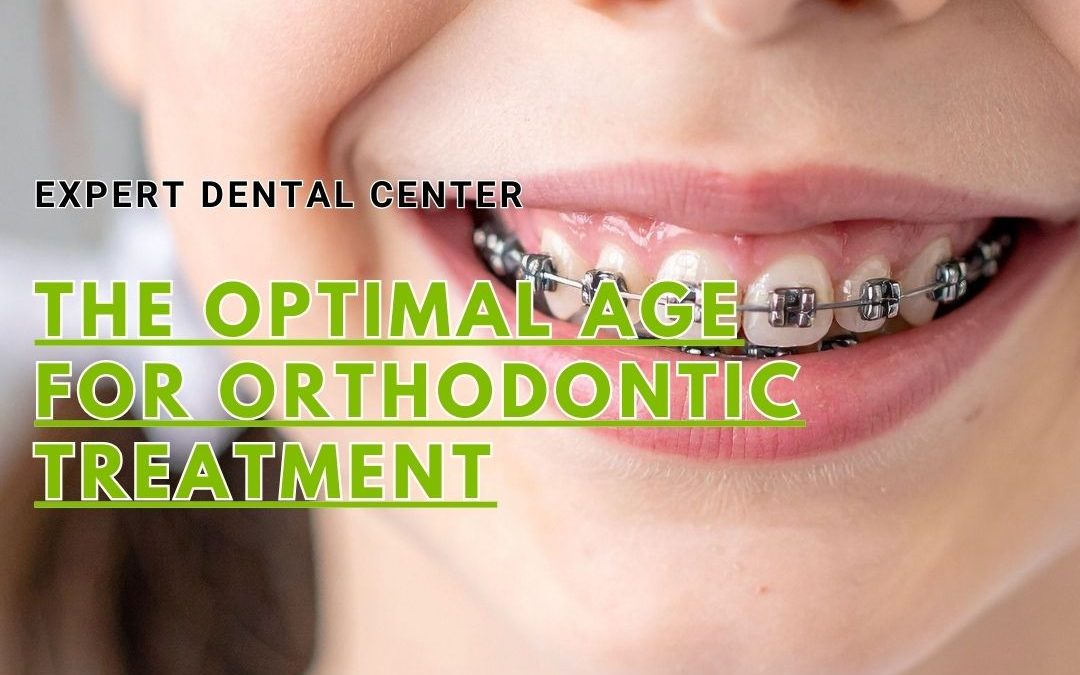
Many parents and individuals want to know the optimal age for orthodontic treatment. In fact, there is no one-size-fits-all answer. However, there are golden age periods when treatment is most effective and easier. This article explains the factors that determine this ideal age. Furthermore, it highlights the importance of early follow-up with a specialist.
What is the Optimal Age for Orthodontic Treatment?
Generally, orthodontists recommend a first orthodontic check-up around age seven. The reason for this early recommendation is that the jawbones are still growing. Consequently, the doctor can proactively assess the development of teeth and jaws. For example, they might discover problems like severe crowding or jaw protrusion. Therefore, they can determine the optimal age for orthodontic treatment for each individual case. This applies whether treatment is immediate or requires waiting and monitoring.
Benefits of Early Dental Treatment
Early orthodontic intervention is a wise investment in a child’s health, offering key advantages:
-
Guiding Jaw Growth: It leverages children’s active bone growth and flexibility to guide jaw development into an ideal position. This improves facial harmony and may eliminate the need for complex surgeries later.
-
Creating Space for Teeth: It expands the jaw or maintains the necessary space for permanent teeth to erupt in an organized manner. As a result, it prevents severe crowding and simplifies future treatment.
-
Preventing Extraction of Healthy Teeth: It significantly reduces the likelihood of needing to extract healthy permanent teeth later to address crowding, as it tackles the root cause early.
-
Eliminating Harmful Habits: It helps break bad oral habits (like thumb-sucking) that cause deformities in teeth and jaws. This allows growth to return to its correct path.
-
Shorter and Simpler Later Treatment: It prepares the oral environment for permanent teeth. Therefore, if a fixed orthodontic treatment becomes necessary during adolescence, it will be less complicated and shorter in duration.
-
Boosting Confidence and Health: It improves appearance and function (chewing and speech) at an early age. Ultimately, this enhances the child’s self-confidence and physical and mental well-being.
In short, early treatment is a preventive and proactive approach. It aims to correct the course of growth and avoid complex problems before they worsen.
Adult Orthodontics: Why is it Never Too Late?
It is important to understand that the optimal age for orthodontic treatment does not mean adults cannot get treatment. On the contrary, adults now make up a significant portion of orthodontic patients. Thanks to technological advances, available options like clear aligners (Invisalign) and ceramic braces are less noticeable and more lifestyle-friendly. Admittedly, adult treatment may take a bit longer. However, the results are excellent and lead to significant improvement in both oral health and self-confidence.
Expert Dental Center in Qatar: Your Destination for the Perfect Smile
When searching for the optimal age for orthodontic treatment and the best care, the need for a center with comprehensive vision and advanced tools becomes clear. In this context, the Expert Dental Center in Qatar stands out as a leading and trusted destination. The center’s role extends beyond providing treatment to begin with an exceptional diagnostic journey. For instance, it uses advanced 3D imaging and digital scanners. This completely eliminates the need for uncomfortable traditional impressions. Moreover, these technologies enable the creation of a precise virtual model of the teeth and jaws. Therefore, the doctor can analyze the problem from all angles and design a customized treatment plan that suits each patient’s unique structure. This allows for determining the optimal age for orthodontic treatment and the precise timing for intervention.
This technical excellence is crowned by a medical team that is the cornerstone of the center’s success. The Expert Dental Center relies on a team of highly experienced and competent orthodontists. These doctors possess precise diagnostic skills and long clinical experience. As a result, they understand the different complexities of each case. This applies whether for children in the growth phase, where monitoring and timing are essential, or for teenagers and adults whose cases require a different approach. The team works in unison and collaborates with other dental specialists when necessary. Their goal is to ensure a final outcome that achieves not only straight teeth but also ideal muscle balance, healthy joint function, and an aesthetic appearance that boosts the patient’s self-confidence.
If you would like more guidance or advanced care, you can explore the Expert Dental Center in Qatar in person by visiting their location in Doha, or check out their latest updates on YouTube and TikTok. For full details and appointment booking, you can visit the official website.
Signs Your Child May Need Braces
Parents should watch for these signs that may indicate the need for an orthodontic evaluation for their child:
-
Losing baby teeth much too early or much too late compared to the normal schedule.
-
Obvious difficulty chewing or biting food.
-
Frequently biting the inside of the cheeks or the roof of the mouth.
-
Constant mouth breathing instead of nasal breathing.
-
Excessive protrusion of the front teeth (buck teeth).
-
Large gaps between permanent teeth.
-
Crowded or overlapped teeth.
-
Front upper and lower teeth not meeting when biting down (open bite).
-
The lower jaw noticeably ahead of the upper jaw, or vice versa (jaw misalignment).
-
Clicking or popping sounds from the jaw joint, or the child feeling pain in it.
-
Speech difficulties or trouble pronouncing some letters due to tooth position.
-
Clear asymmetry in facial features when viewed from the front or side.
How to Maintain Your Orthodontic Results
After removing the braces, you enter the crucial “retention” phase to maintain the achieved results. Here are the key steps:
-
Wear Retainers Precisely: This is the most important step. Retainers hold teeth in their new positions until they fully stabilize in the jawbone. The doctor sets a wearing schedule (e.g., 24 hours a day initially, then only at night). Neglecting this leads to rapid and noticeable teeth shifting back.
-
Clean and Care for Retainers: Clean retainers daily with a soft brush and special paste or mild soap (not regular toothpaste that can scratch them). Always store them in their protective case when not in use, and avoid high heat that can warp them.
-
Maintain Comprehensive Oral Hygiene: Continue brushing your teeth at least twice daily and flossing. This helps prevent plaque buildup and decay around areas where braces were, which may be more sensitive.
-
Protect Retainers from Loss or Damage: Handle retainers gently. Keep them away from pets and small children. Avoid placing them in a napkin on the table where they could be accidentally thrown away.
-
Commit to Regular Dental Check-ups: These visits are essential to monitor stability and check retainer integrity. The doctor ensures teeth haven’t moved and adjusts or replaces the retainer as needed.
-
Watch for Any Sudden Changes: If you notice the retainer becoming tight or teeth starting to shift, don’t wait for your regular appointment. Contact your doctor immediately to address the problem early.
Conclusion
In conclusion, determining the optimal age for orthodontic treatment is a joint personal and professional decision based on accurate individual diagnosis. While childhood, specifically around age seven, remains an excellent time for an initial evaluation and preventive or early intervention, advances in orthodontics have opened the door wide to successful and effective treatment at all ages, including adulthood. The real key lies in not delaying a specialized consultation. An early examination helps develop a comprehensive, long-term treatment plan, whether treatment starts immediately or after a monitoring period. Ultimately, the goal of orthodontics goes beyond aesthetics to include achieving better overall oral health, optimal chewing and speech function, and a smile that boosts self-confidence for many years to come. Therefore, taking the first step and consulting an experienced orthodontist is the best investment for the health of your mouth and your smile.