

What Are the Benefits of Dental Bridges, and How Do They Replace Missing Teeth?
Missing teeth can affect the appearance of your smile and cause difficulties with chewing and speaking. Therefore, dentists recommend restorative treatments that help patients regain essential oral functions. The Benefits of Dental Bridges make them an effective option for replacing one or several adjacent missing teeth. Dentists use natural teeth or dental implants to support these fixed restorations. Additionally, dental laboratories create artificial teeth that match the shape and color of neighboring teeth. However, dental bridges come in different designs depending on the location of missing teeth and the condition of supporting structures. Consequently, dentists begin with a comprehensive examination to determine the most appropriate treatment. They also evaluate gum health, tooth strength, and bite alignment before making recommendations. Ultimately, dental bridges aim to restore natural aesthetics and improve oral function. Nevertheless, successful treatment requires careful planning and consistent maintenance.
The Main Benefits of Dental Bridges for Oral Health and Appearance
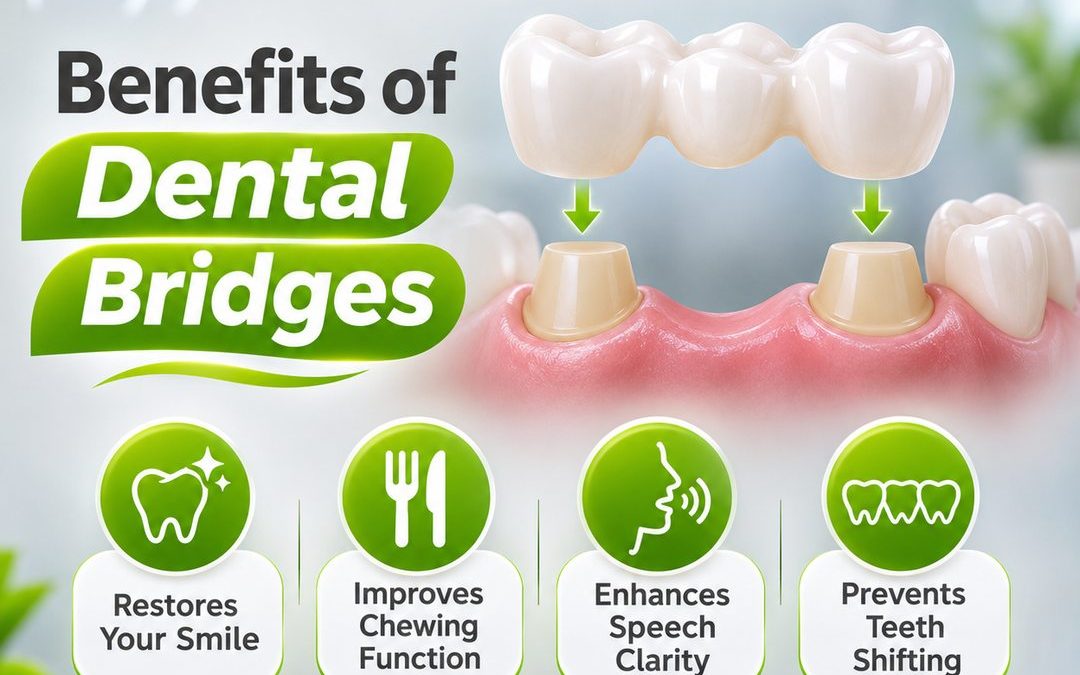
Fixed dental bridges offer several advantages that help replace missing teeth and improve patients’ quality of life. They do more than simply close gaps between teeth. They also support essential oral functions and improve everyday comfort. Furthermore, appropriately designed bridges may help prevent neighboring teeth from shifting into empty spaces.
The main advantages include:
- Improved chewing function: Dental bridges help patients chew food more comfortably and efficiently.
- Clearer speech: Replacing missing teeth can improve the pronunciation of certain sounds.
- Restored smile aesthetics: Bridges close visible gaps and improve the overall symmetry of the smile.
- Reduced tooth movement: They help prevent neighboring teeth from tilting toward missing-tooth spaces.
- Improved bite stability: Dental bridges restore important contact points between teeth.
- Fixed tooth replacement: Unlike removable dentures, conventional bridges remain securely in place during daily activities.
- No implant surgery required: Traditional tooth-supported bridges replace missing teeth without surgical implant placement.
Therefore, dental bridges provide both functional and aesthetic benefits. However, individual results depend on oral health and the condition of supporting teeth.
How Do Dental Bridges Improve Chewing and Eating Comfort?
Natural teeth play an essential role in cutting and grinding food before swallowing. When someone loses a tooth, chewing efficiency may decrease in the affected area. Consequently, dental bridges help restore an important part of normal oral function. A bridge replaces the missing tooth and provides an additional chewing surface. Furthermore, it may reduce the need to chew exclusively on one side of the mouth. However, dentists must carefully evaluate how chewing forces affect the supporting teeth. Therefore, proper bridge design and bite alignment remain essential. Dentists should also avoid placing excessive pressure on supporting structures. Nevertheless, improved chewing does not mean patients can eat every type of food without precautions. Extremely hard foods may damage certain dental restorations. Ultimately, careful treatment planning helps balance comfort, functionality, and long-term restoration durability.
The Role of Dental Bridges in Improving Speech and Pronunciation
Teeth, the tongue, and lips work together to produce clear speech. Therefore, missing front teeth may affect the pronunciation of certain sounds. Air may escape through unnatural gaps and change normal speech patterns. Additionally, the tongue may adjust its position to compensate for missing teeth. Dental bridges can restore part of the oral structure necessary for proper pronunciation. However, the degree of improvement depends on the location of the missing tooth and the patient’s individual condition. Some patients may also need a short adjustment period after receiving their new restoration. Furthermore, dentists must consider bridge thickness and its relationship with tongue movement. An unsuitable design may temporarily interfere with speech. Consequently, patients should report persistent pronunciation difficulties during follow-up appointments. Ultimately, precise bridge design helps improve comfort, speech clarity, and natural oral function.
Types of Dental Bridges and Their Different Support Systems
Dental bridges vary in design and attachment methods. Therefore, no single bridge type suits every patient. Dentists select the appropriate restoration according to the location of missing teeth and the strength of neighboring teeth. Additionally, they consider chewing forces and periodontal health. Traditional dental bridges remain a common option because they use crowns on supporting teeth. Meanwhile, Maryland bridges use bonded wings attached to the back surfaces of adjacent teeth. Consequently, they may require less tooth preparation in certain cases. Cantilever bridges, on the other hand, rely on support from only one side of the missing-tooth space. However, dentists must carefully assess the forces affecting these restorations. Implant-supported bridges provide another alternative by using dental implants instead of natural teeth. Nevertheless, this option requires surgical procedures. Ultimately, dentists determine the most suitable design after evaluating anatomical, functional, and aesthetic factors.
Benefits of Dental Bridges Compared With Dental Implants and Removable Dentures
Tooth replacement options differ in cost, treatment duration, and attachment methods. Therefore, patients should understand these differences before choosing a treatment. Traditional dental bridges generally require less treatment time than implant-supported restorations. Additionally, they do not require surgery within the jawbone. Dental implants, in contrast, involve surgical placement and often require a healing period. However, implants can preserve neighboring teeth because they do not require preparation of adjacent healthy teeth. Removable partial dentures offer another option. Patients can remove these appliances for cleaning outside the mouth. Nevertheless, some individuals prefer the stability of fixed dental bridges during everyday activities. Furthermore, traditional bridges do not stimulate the jawbone in the same way as dental implants. Consequently, bone resorption may continue beneath the missing-tooth area. Ultimately, the most appropriate treatment depends on oral health, budget, and individual preferences.
Dental Bridge Materials and Their Impact on Treatment Results
Dentists use different materials to manufacture dental bridges according to restoration location and patient requirements. Common options include zirconia, dental ceramics, and porcelain-fused-to-metal restorations. Zirconia offers high mechanical strength, making it suitable for certain restorations that withstand significant chewing forces. Additionally, some zirconia materials provide attractive aesthetic results for visible teeth. Glass ceramics, meanwhile, offer excellent optical properties. However, they are not suitable for every bridge design. Porcelain-fused-to-metal bridges combine a metal framework with an aesthetic ceramic covering. Nevertheless, the porcelain layer may chip under certain conditions. Therefore, dentists select materials according to bridge length, bite forces, and available restorative space. They also consider potential metal sensitivities when necessary. Ultimately, accurate design and proper placement influence treatment success as much as material quality.
Dental Bridge Procedure: From Examination to Final Placement
Dental bridge treatment involves several essential stages. Throughout the process, dentists evaluate oral health and select appropriate restorative solutions. Additionally, careful treatment planning supports stable functional and aesthetic outcomes.
The main treatment stages include:
- Clinical examination: The dentist examines the teeth and gums, evaluates the missing-tooth space, and checks the condition of supporting teeth.
- Treatment planning: The dentist selects the appropriate bridge type and materials. Diagnostic X-rays may also help assess supporting teeth and surrounding bone.
- Tooth preparation: For traditional bridges, the dentist prepares adjacent teeth to accommodate the supporting crowns.
- Dental impressions: The dentist uses conventional impressions or digital scanning to obtain accurate dental measurements.
- Bridge fabrication: A dental laboratory creates the restoration according to the treatment plan. Meanwhile, the dentist may provide a temporary bridge.
- Final placement: The dentist evaluates the bridge’s appearance, fit, tooth contacts, and bite alignment before securing it.
- Aftercare and follow-up: The dentist explains proper cleaning techniques and schedules appointments to monitor the bridge and supporting teeth.
How to Clean Dental Bridges and Maintain Healthy Gums
Dental bridges require careful daily cleaning because food particles and dental plaque can accumulate beneath artificial teeth. Therefore, brushing visible tooth surfaces alone does not provide complete oral hygiene. Patients should use appropriate cleaning tools to reach the area underneath the bridge. For example, specialized dental floss and floss threaders can help remove plaque from difficult spaces. Additionally, interdental brushes may help clean around supporting teeth. Water flossers can also provide supplementary cleaning benefits. However, patients should choose suitable tools according to their dentist’s recommendations. Furthermore, dentists generally recommend brushing twice daily with fluoride toothpaste. Patients should also monitor persistent gum bleeding or unpleasant odors. These symptoms may indicate plaque accumulation or other oral health problems. Ultimately, consistent oral hygiene helps protect supporting teeth, maintain healthy gums, and reduce the risk of complications.
Expert Dental Center in Qatar: International Expertise and Advanced Dental Technologies
Expert Dental Center in Qatar combines international dental expertise with advanced technologies to provide comprehensive oral and dental care. The center brings together a team of specialized dental professionals with academic qualifications from Germany, the United States, Australia, and Qatar. Furthermore, the team offers extensive experience in many dental services like dental implants, orthodontics, cosmetic dentistry, oral surgery, and pediatric dentistry.
In addition, the center utilizes advanced dental technologies, including 3D intraoral scanning, digital smile design, 3D dental imaging, dental microscopy, and clear aligner orthodontics. Moreover, its multidisciplinary approach allows patients to receive comprehensive dental assessments and personalized treatment plans tailored to their individual needs.
The dental team also prioritizes clear communication, helping patients understand their treatment options and make informed decisions. Additionally, patients can communicate with dental professionals in multiple languages, including Arabic, English, German, Spanish, and Swedish.
Ultimately, Expert Dental Center combines academic excellence, clinical expertise, and modern dental technology to deliver comprehensive dental care that focuses on oral health, functionality, and the natural aesthetics of every smile.
If you would like to book an appointment additional consultations or wish to explore advanced treatment options, you can learn more about Expert Dental Center in Qatar by visiting the center’s location in Doha, following its YouTube channel, checking its TikTok and Instagram accounts, or visiting the official website online.
Conclusion: How to Choose the Right Dental Bridge and Protect Your Smile
The Benefits of Dental Bridges include replacing missing teeth, improving chewing function, supporting clearer speech, and restoring natural smile aesthetics. Additionally, properly designed bridges may help reduce unwanted movement of neighboring teeth and improve bite stability. However, traditional dental bridges are not suitable for every patient. Successful treatment depends on healthy supporting teeth, strong periodontal tissues, accurate design, and proper placement. Therefore, patients should undergo a comprehensive dental examination before choosing a restoration. They should also discuss alternatives, including dental implants and removable partial dentures. Furthermore, patients need to understand how preparing natural teeth may influence their treatment decisions. Long-term maintenance costs and potential replacement expenses also deserve consideration. Most importantly, consistent oral hygiene and regular dental checkups help maintain oral health. Ultimately, successful dental bridge treatment involves more than closing gaps. It should restore comfort, function, and natural aesthetics while supporting long-term dental health. Personalized treatment planning remains essential for achieving reliable and sustainable results.